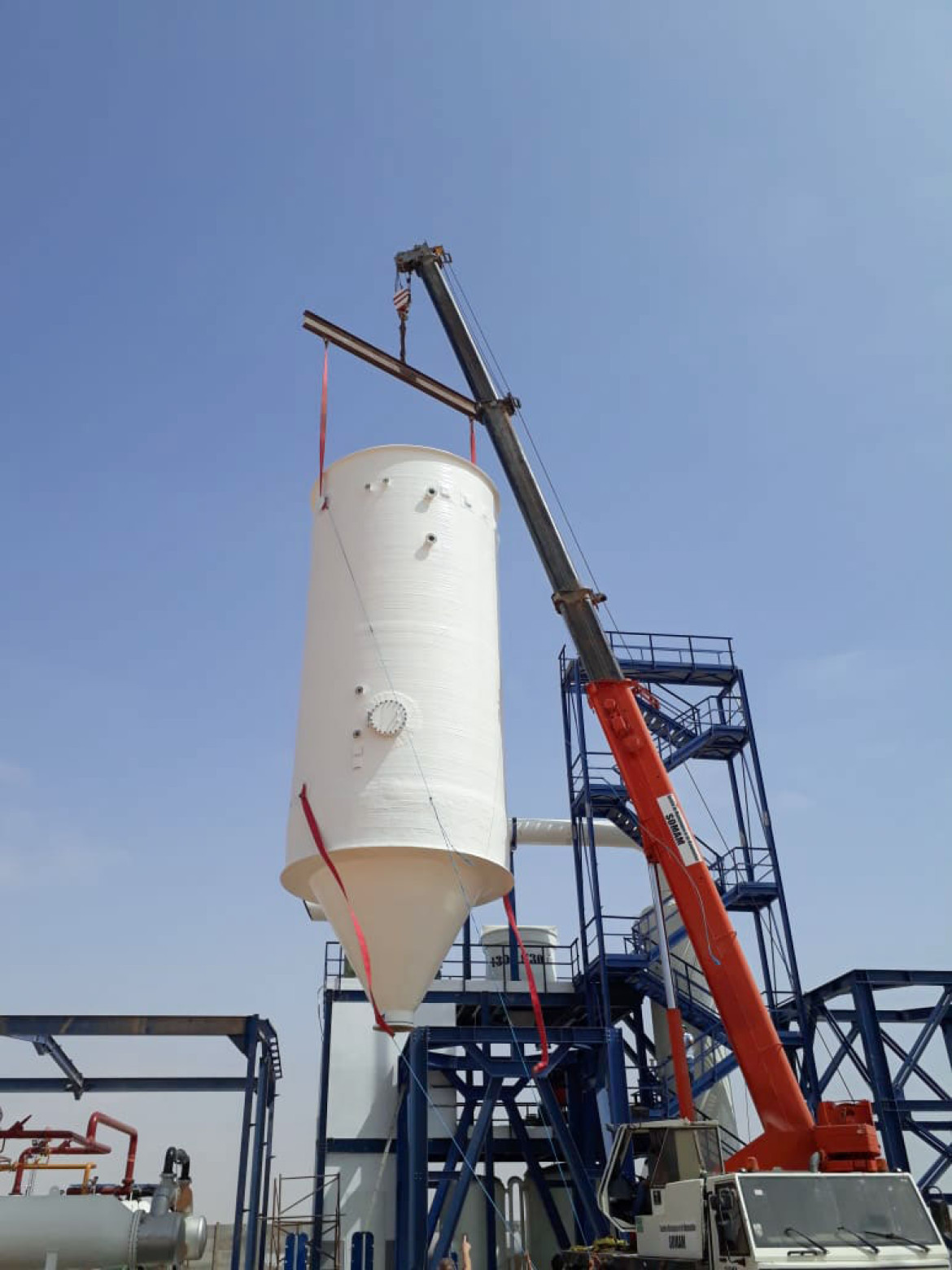
GRP silos storage and Decanters : Innovation and Reliability for Industry
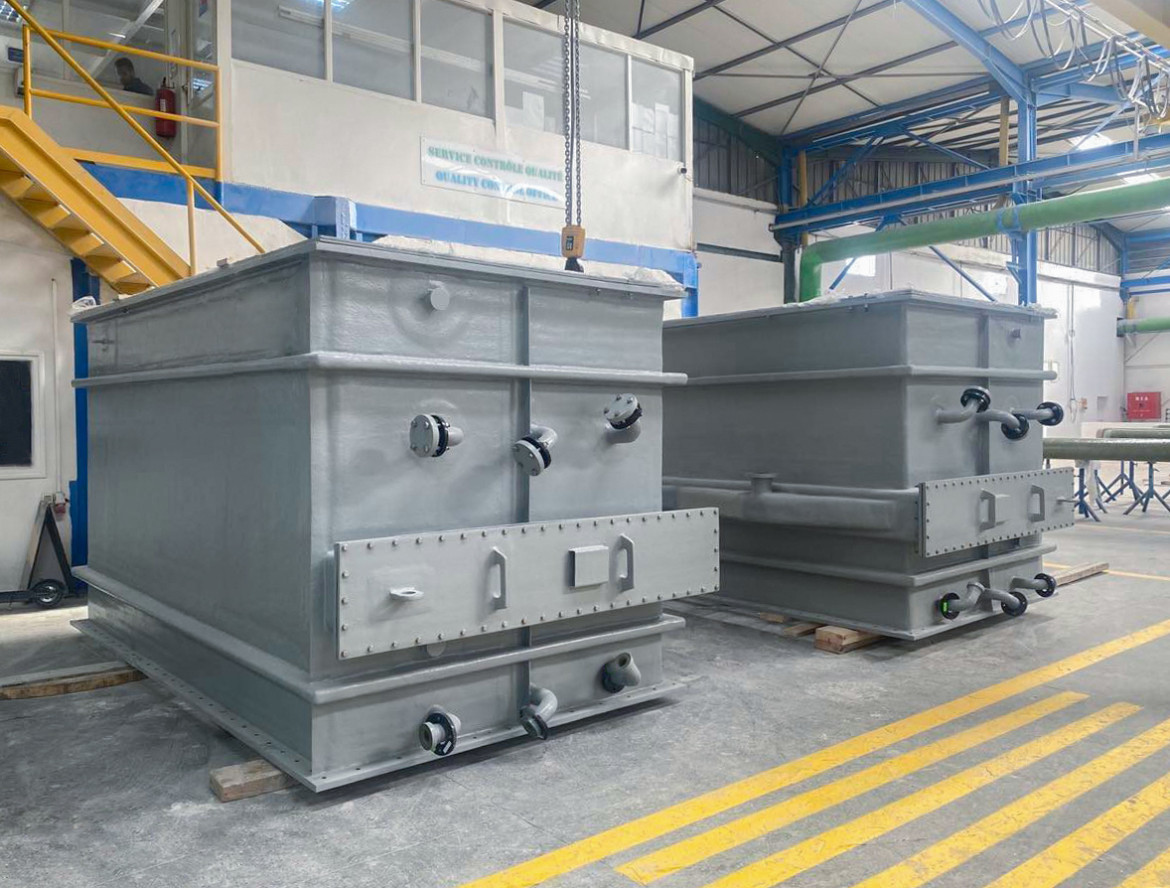
Ask for a brochureGRP decanters and storage silos represent an advanced and innovative solution for the storage and decanting of various materials in a wide range of industrial sectors.
Designed to meet the stringent requirements of European and international standards, this equipment offers an exceptional combination of durability, chemical and mechanical resistance, and application flexibility, ideal for meeting the most stringent environmental and operational requirements.
Compliance with Standards: Optimal Performance
GRP decanters and silo storage are designed and manufactured in accordance with European standard EN 13121-3. This standard establishes the essential criteria for the structural strength, load-bearing capacity and durability of GRP equipment, guaranteeing optimum safety and performance in a wide range of conditions.
In addition to this standard, GCER is committed to complying with various global standards, to ensure consistent quality and reliability on an international scale.
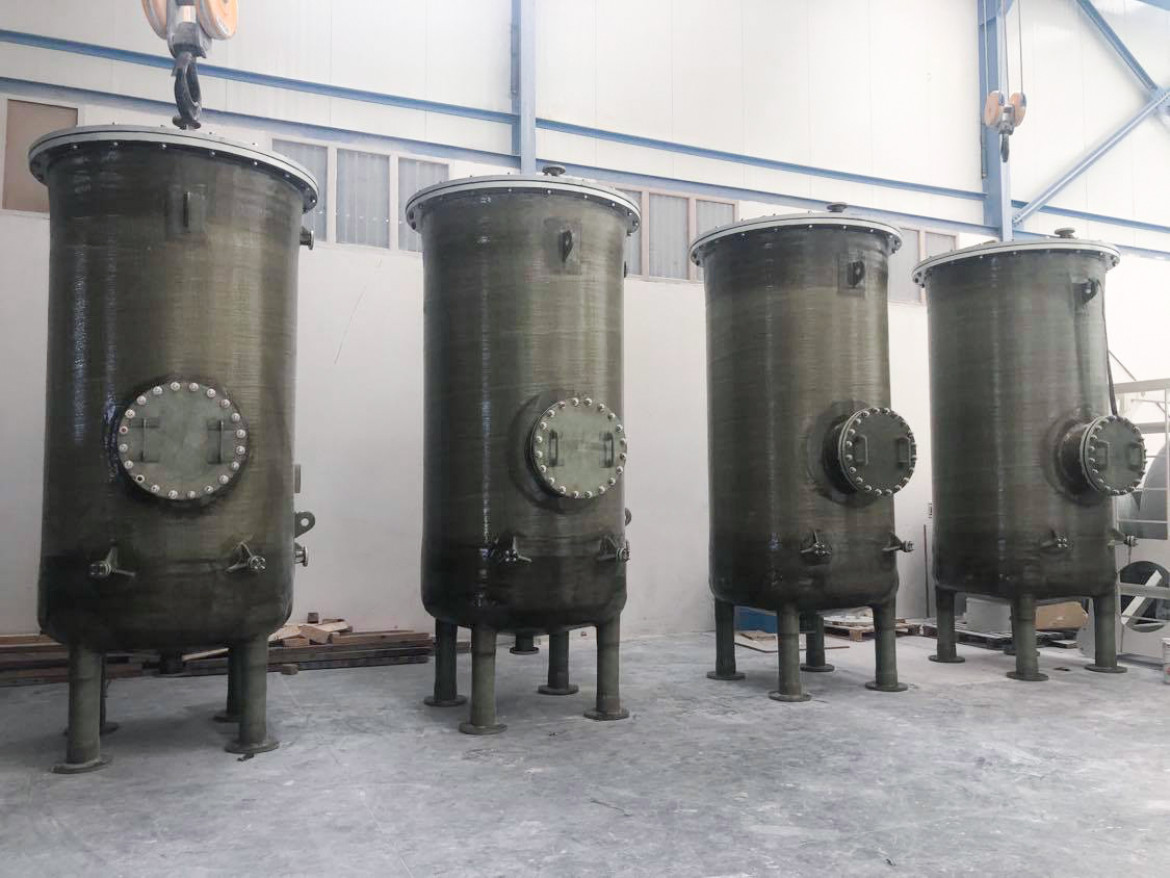
Design and Fabrication of GRP Silos storage: Innovative Solutions for Optimal Stability
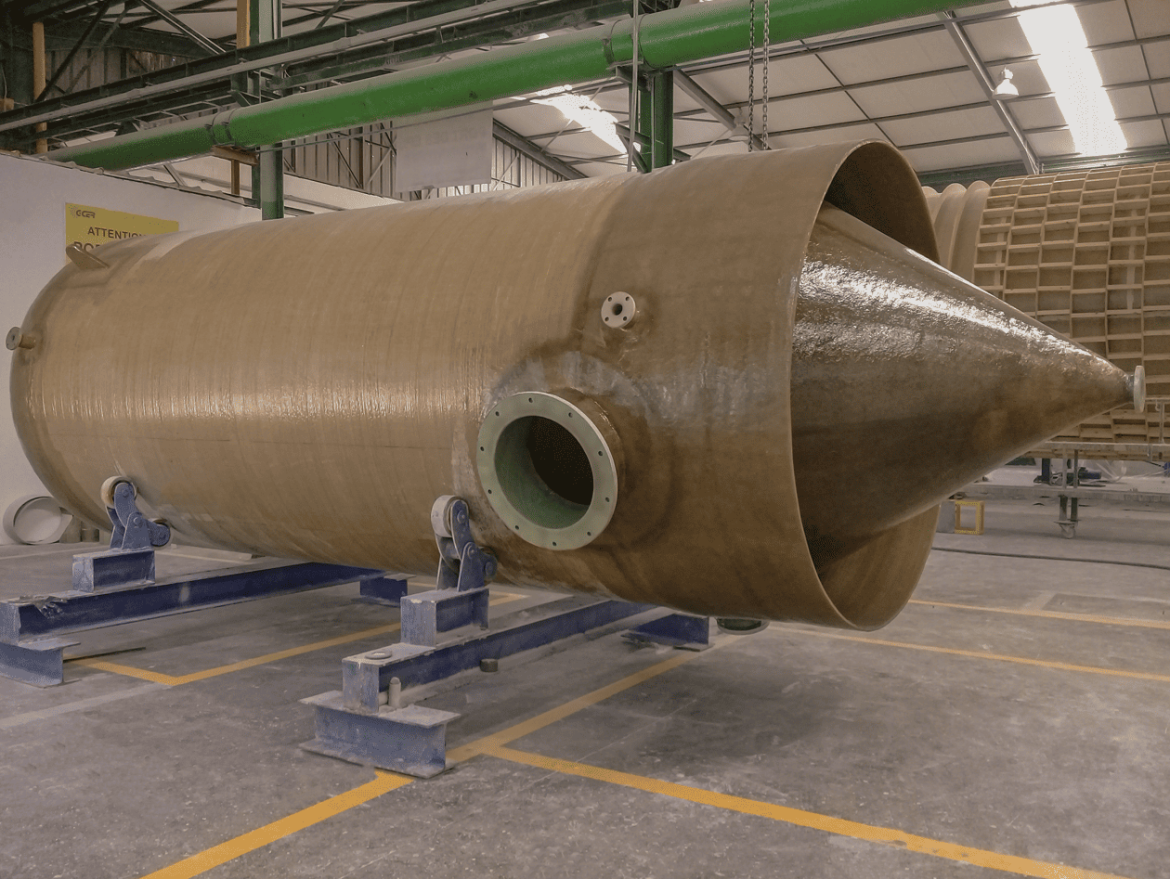
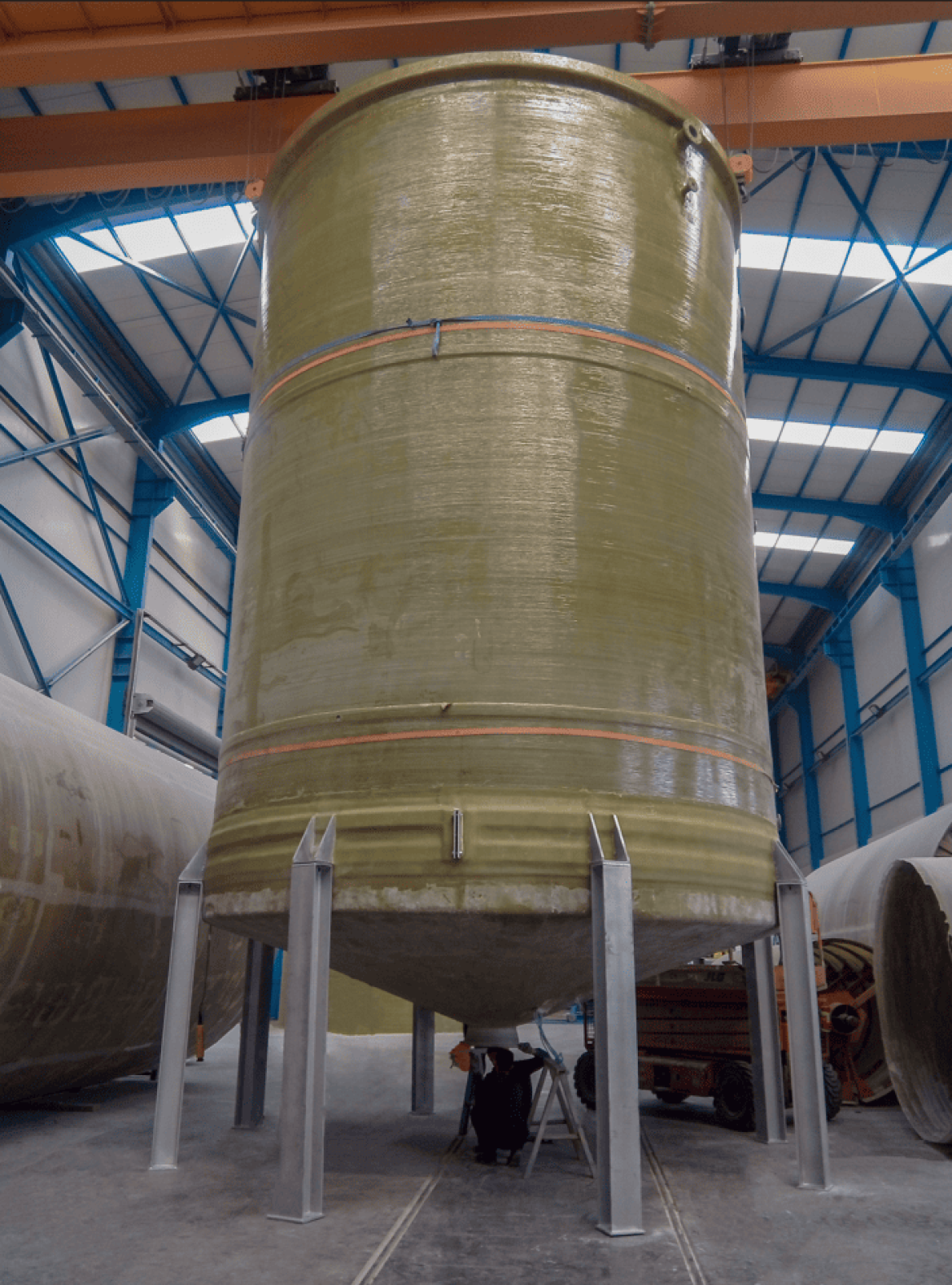
For silos storage with a diameter of 1500 mm or less, the frames are typically made with metal legs. This design allows for an even distribution of weight and ensures optimal stability of the silo. For larger silos, the frames are constructed from a rolled ring, an advanced manufacturing technique that provides better weight distribution and ease of installation and maintenance. Support legs extend from this ring, ensuring a robust and durable structure capable of bearing significant loads.
Advanced Decantation Techniques to Optimize the Efficiency of GRP Clarifiers
The decantation techniques used in GRP clarifiers include gravity decantation and centrifugal decantation. The former relies on the difference in density between solids and liquids to enable separation, while the latter uses centrifugal force to accelerate this process. These techniques, combined with advanced composite material technology, ensure maximum efficiency and optimal waste management.
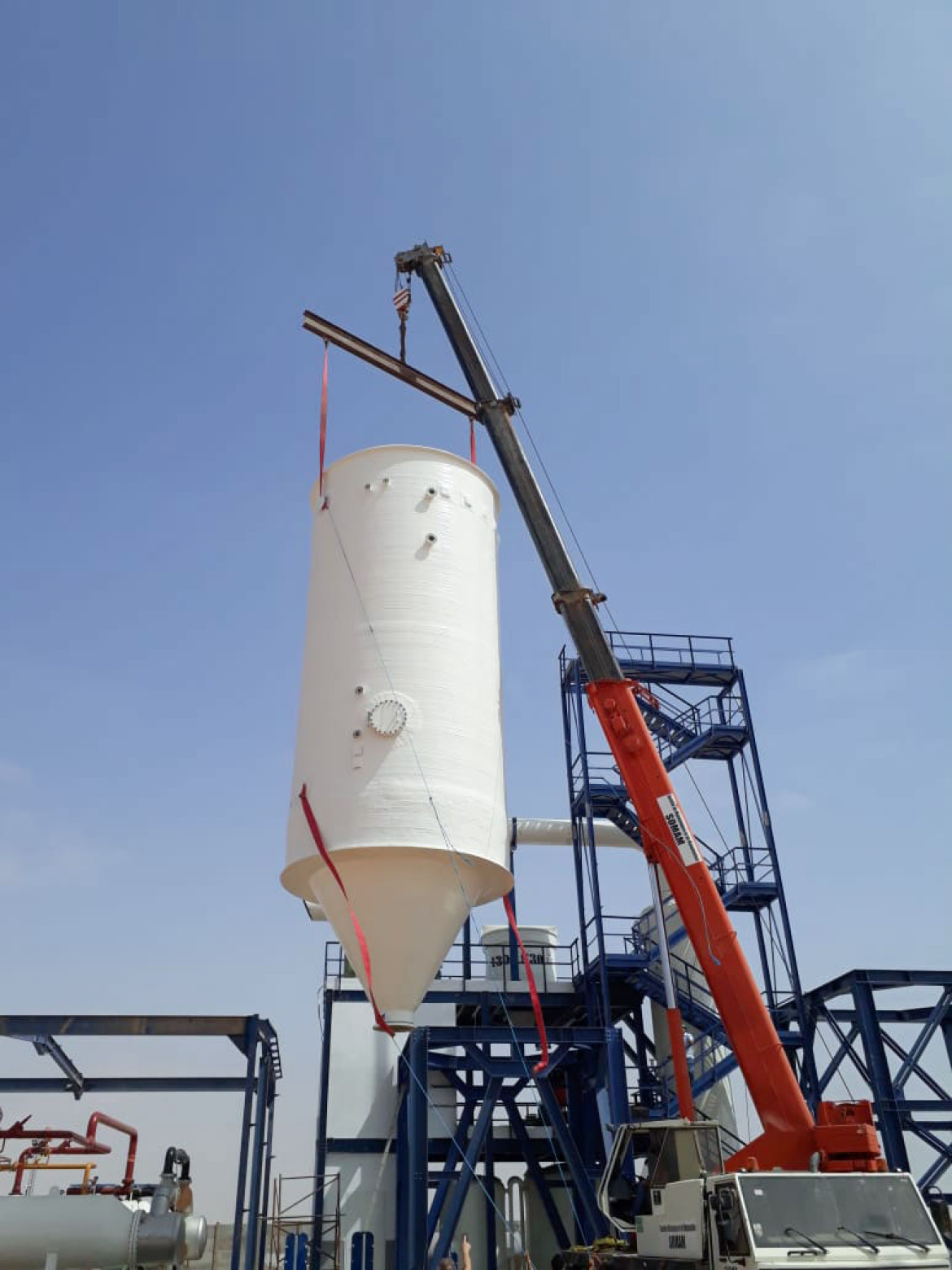
Manufacturing Process of GRP Clarifiers and Silos at GCER
GCER uses advanced manufacturing techniques such as filament winding, hand lay-up molding, and simultaneous spraying to produce high-quality GRP clarifiers and silos. These methods ensure material uniformity and optimal mechanical strength while allowing great flexibility in the design and customization of products.
Filament Winding
This technique involves winding resin-impregnated glass fibers around a rotating mandrel, creating a solid and uniform composite structure. Filament winding allows precise control of the thickness and orientation of the fibers, providing exceptional mechanical strength.
Hand Lay-Up Molding
Hand lay-up molding is a manual method that involves applying layers of glass fiber and resin onto a mold. This technique is particularly suitable for manufacturing small parts and complex shapes, ensuring high precision and superior quality.
Simultaneous Spraying
Simultaneous spraying combines the simultaneous application of glass fibers and resin onto a mold using a spray gun. This method allows for the rapid and efficient production of composite parts while ensuring excellent adhesion and high strength.
Applications of GRP Clarifiers: Performance and Durability Across Various Sectors
GRP decanters are essential in solids and liquids separation processes, commonly used in the chemical, petrochemical, food and water treatment industries. Their chemical and mechanical resistance ensures optimum performance and long service life, even in demanding environments.
Advantages of GRP Clarifiers and Silos storage
GRP clarifiers and silos are recognized for their numerous benefits in various industrial applications.
Exceptional Durability and Resistance
GRP offers outstanding resistance to corrosion and aggressive chemicals, ensuring extended equipment longevity. This durability reduces maintenance costs and production downtime, leading to better long-term profitability.
Custom Solutions
GRP clarifiers and silos can be customized to meet the specific needs of each application. Whether it involves dimensions, shapes, or special features, GCER provides tailored solutions to meet each client’s requirements.
Compliance with Standards and Assured Safety
Compliance with international standards ensures that each piece of equipment meets the highest safety criteria. Additionally, advanced manufacturing techniques guarantee exceptional structural integrity and reliability, essential for industries where safety is a top priority.
we're here to help
Show AllGRP (Glass Reinforced Polyester) is a composite material combining polyester resin and glass fibers. This combination gives it high mechanical strength, excellent durability, and remarkable chemical resistance.
GRP (Glass Reinforced Polyester) is a composite material offering an exceptional combination of lightness, mechanical strength, and durability. It is distinguished by its high resistance to corrosion, chemicals, and extreme environmental conditions, making it ideal for a wide range of industrial applications. In addition, its design flexibility allows for the manufacture of custom structures, optimizing the performance and longevity of equipment.
GRP (Glass Reinforced Polyester) cannot be recycled in the same way as traditional plastics. Due to its composite composition—a polymer matrix reinforced with glass fibers—conventional mechanical recycling is difficult. However, there are specialized processes for recovering end-of-life materials, including energy recovery or grinding techniques and reuse in secondary applications (fillers, construction materials, etc.). In addition, research is underway to develop more sustainable recycling methods for composites. GCER remains attentive to these technological developments in order to integrate environmentally friendly solutions into its processes.
Yes, we specialize in custom design. Our engineers work collaboratively with our customers to develop solutions tailored to their requirements.
GCER is located in Ksibet Sousse, Tunisia, specifically on Route de Thrayet. For any information requests, you can contact us : By phone: +216 73 238 960 / +216 70 015 590 By email: commercial@gcertunisie.tn Or directly via our online contact form: https://gcertunisie.com/demande-de-contact
To obtain a quote, please fill out the quote request form on our website or contact our sales team directly by email at the following address : commercial@gcertunisie.tn We will respond as soon as possible.
GCER is certified: ✅ ISO 9001:2015 – Quality management systems ✅ ISO 14001:2015 – Environmental management systems ✅ ISO 45001:2018 – Occupational health and safety management systems ✅ MSI (Materials, Systems, Installations) – Technical certification guaranteeing the compliance of products and processes with specific sector requirements ✅ Authorized Economic Operator (AEO) – Customs recognition attesting to the reliability of the company in the international supply chain These certifications demonstrate GCER's commitment to quality, safety, regulatory compliance, and customer satisfaction, while ensuring reliable, sustainable, and certified solutions.
GRP (Glass Reinforced Polyester) equipment has a service life of between 30 and 50 years, depending on conditions of use and maintenance. Its resistance to corrosion and low maintenance requirements ensure a long service life. Regular maintenance helps to preserve its performance and maximize its service life.
We use several GRP manufacturing technologies, including filament winding, contact molding, and simultaneous projection, to ensure that our equipment is durable and complies with the most stringent international standards.
Yes, we offer an assembly service for all our equipment. Our technical team ensures that assembly complies with standards, guaranteeing optimal installation and reliable operation of your products.
Manufacturing and delivery times depend on the project. We are committed to providing you with fast solutions tailored to our customers' needs.
At GCER, the manufacturing process involves several steps : 1. Research and design : We begin by studying each customer's specific needs in order to design tailored solutions. 2. Manufacturing : The equipment is manufactured in our workshops. 3. Quality control : We check the compliance of each piece of equipment during manufacturing. 4. Testing : Each piece of equipment is tested before delivery. 5. Delivery : The equipment is delivered to the project site on schedule. 6. On-site installation : Our teams install the equipment on site quickly and efficiently.
At GCER, we offer comprehensive solutions for your industrial projects, taking care of every step from design to commissioning. With us, you benefit from a single partner who ensures optimal coordination, on-time delivery, and consistent quality. Our solutions are tailored to your specific needs, backed by our expertise and rigorous monitoring. Contact us today for your industrial projects.
GCER operates in various sectors, including : • Water and water desalination • Wastewater • Chemicals • Agri-food • Energy • Mining • Oil • Environment • Industrial processes
GCER specializes in : • Composite materials (GRP) • Thermoplastics such as HDPE, PVC, PPH, PVDF, PVC-C, ECTFE, and PFA • Metal construction
To find out if thermoplastic or GRP equipment has reached the end of its service life, check for : • Cracks or deformations. • Loss of resistance to stress. • Leaks or damaged seals. • Reduced performance after testing or inspections. It is important to follow the manufacturer's recommendations and carry out regular checks.
GRP (Glass Reinforced Polyester) is generally more expensive than thermoplastics. This difference is due to a more complex manufacturing process and the use of reinforced materials. However, GRP offers better mechanical and chemical resistance, making it ideal for demanding applications.