Standard GRP (Glass Reinforced Polyester) grating shapes are rectangular, but they can also be custom-made in square, circular, triangular, or any other shape according to specific customer requirements.
The standard color for GRP (Glass Reinforced Polyester) gratings is gray. Other colors are available on request to meet specific aesthetic or functional requirements (visibility, industrial color coding, etc.).
An access hatch is a closure (often solid or partially openwork) that provides access to, or closure of, an opening such as a manhole, tank or inspection chamber etc. It can be hinged, removable or lockable depending on its intended use.
The access hatch is used to : • Close or secure an opening (manhole, technical room, tank, etc.). • Provide occasional access for maintenance, inspection, or cleaning. • Ensure watertightness, safety, or protection against intrusion.
In some cases, reinforced grating can be used as a cover or openwork hatch, particularly when ventilation or drainage is required. However, for watertight or secure closure functions, a specific hatch is recommended.
The standard dimensions of GRP (Glass Reinforced Polyester) access hatches vary depending on the model : • P38 – Thickness 41 mm : 1220 x 3660 mm • P30 – Thickness 33 mm : 1000 x 4000 mm • P40 – Thickness 41 mm : 1000 x 4000 mm Custom sizes can be manufactured to meet specific customer requirements.
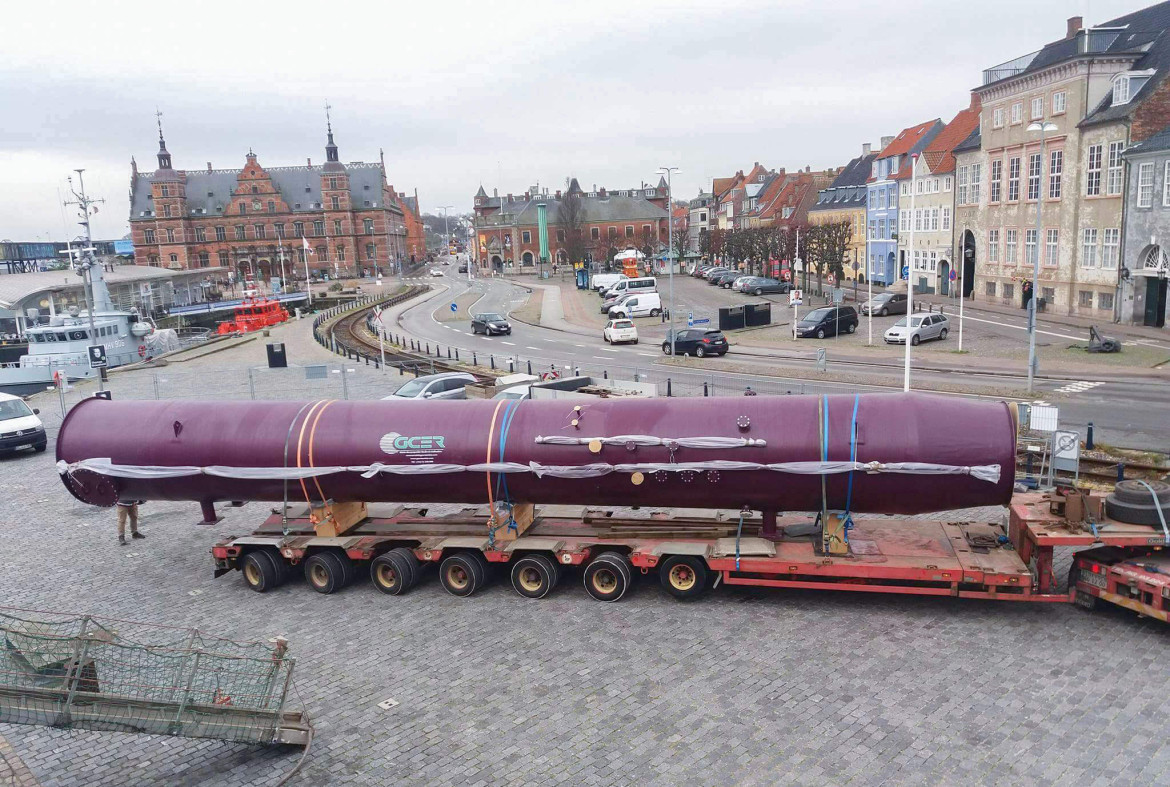
Thermoplastics are polymer materials that become flexible when heated and regain their rigidity when cooled. This reversible process allows them to be shaped, welded, and recycled. They are widely used in the manufacture of pipes, tanks, ducts, and other industrial equipment.
GCER uses a wide range of high-quality thermoplastic materials, such as: • HDPE (High-Density Polyethylene) • PVC (Polyvinyl Chloride) • PPH (Homopolymer Polypropylene) • PVDF (Polyvinylidene Fluoride) • PVC-C (Chlorinated Polyvinyl Chloride) • ECTFE (Ethylene Chlorotrifluoroethylene) • PFA (Perfluoroalkoxy)
Thermoplastic equipment offers many advantages : • Excellent chemical resistance : ideal for corrosive and aggressive environments • Lightweight : simplifies handling and installation and reduces transport costs • Increased durability : long service life, even in extreme conditions • Low thermal conductivity : limits heat loss and improves safety • Reduced maintenance : requires little maintenance thanks to its chemical inertness • Design flexibility : allows for customized solutions tailored to each application • Food compatibility (depending on materials) : complies with food industry health standards • UV and moisture resistance : suitable for outdoor installations
Yes, thermoplastics are recyclable. Unlike thermosets, thermoplastics can be melted and reshaped several times without significantly altering their properties. This allows them to be recovered and reused in new products, making them a more environmentally friendly material when properly sorted and processed in a suitable recycling stream.