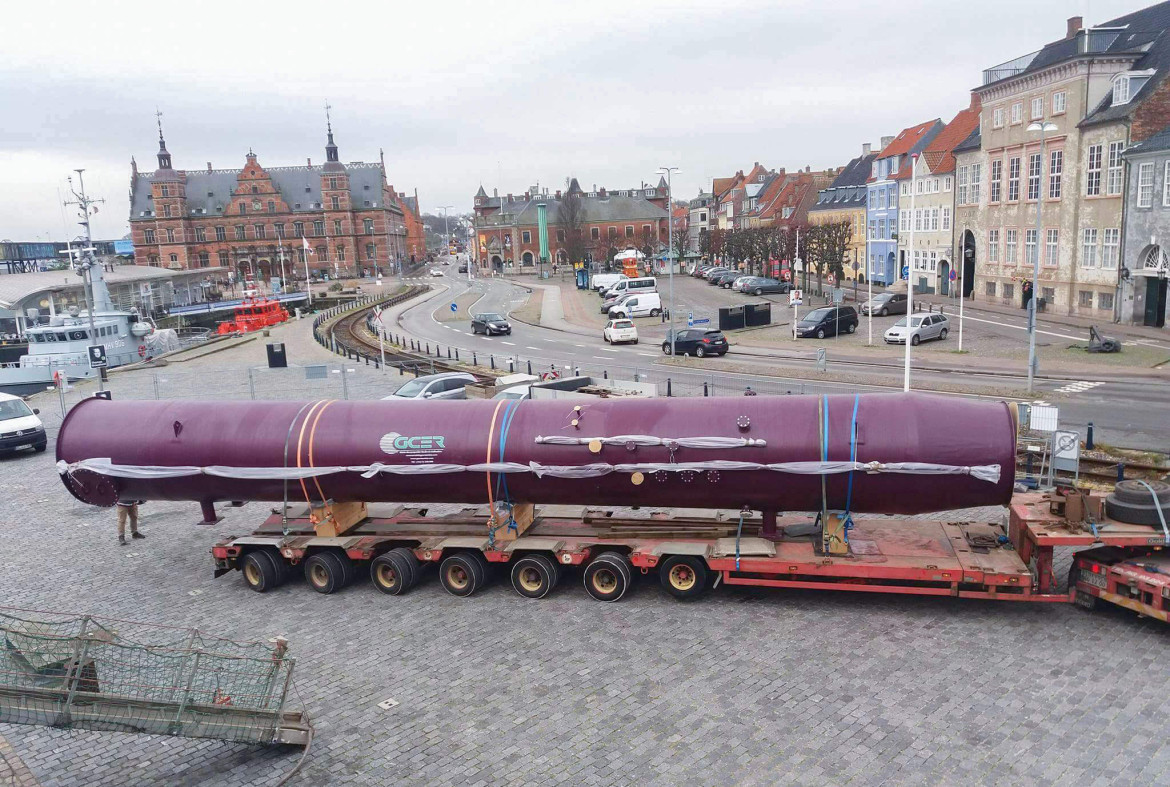
At GCER, we offer comprehensive solutions for your industrial projects, taking care of every step from design to commissioning. With us, you benefit from a single partner who ensures optimal coordination, on-time delivery, and consistent quality. Our solutions are tailored to your specific needs, backed by our expertise and rigorous monitoring. Contact us today for your industrial projects.
GCER operates in various sectors, including : • Water and water desalination • Wastewater • Chemicals • Agri-food • Energy • Mining • Oil • Environment • Industrial processes
GCER specializes in : • Composite materials (GRP) • Thermoplastics such as HDPE, PVC, PPH, PVDF, PVC-C, ECTFE, and PFA • Metal construction
To find out if thermoplastic or GRP equipment has reached the end of its service life, check for : • Cracks or deformations. • Loss of resistance to stress. • Leaks or damaged seals. • Reduced performance after testing or inspections. It is important to follow the manufacturer's recommendations and carry out regular checks.
GRP (Glass Reinforced Polyester) is generally more expensive than thermoplastics. This difference is due to a more complex manufacturing process and the use of reinforced materials. However, GRP offers better mechanical and chemical resistance, making it ideal for demanding applications.
GRP (Glass Reinforced Polyester) pipes offer many advantages : they are highly resistant to corrosion, lightweight and easy to install, and require little maintenance. They are also durable with a long service life, and offer good thermal insulation, making them a reliable and economical solution for many industrial environments.
Our GRP (Glass Reinforced Polyester) pipes are suitable for transporting a wide range of fluids, including chemicals, drinking water, wastewater, hydrocarbons, and other industrial liquids. With their corrosion resistance, they can be used for aggressive and corrosive fluids in extreme conditions.
The lifespan of a GRP (Glass Reinforced Polyester) tank is generally longer than that of a steel tank. • GRP tank : it can last between 30 and 50 years, or even longer, as it does not rust and is resistant to chemicals and harsh conditions. It is also lightweight during installation and can be buried or above ground, reducing maintenance and handling costs. • Steel tank : its lifespan is often 15 to 25 years, as it can rust and corrode, especially if exposed to moisture or chemicals.
GRP (Glass Reinforced Polyester) tanks are more expensive than steel tanks because they are made from more costly materials, such as resins and glass fibers. In addition, their manufacture is more complex. However, they last longer, are more resistant to corrosion, and require less maintenance.
GRP (Glass Reinforced Polyester) tanks are used to store a wide range of liquids, including drinking water, rainwater, chemicals, industrial liquids, and food products, etc. Their resistance to corrosion and chemicals makes them suitable for these applications.