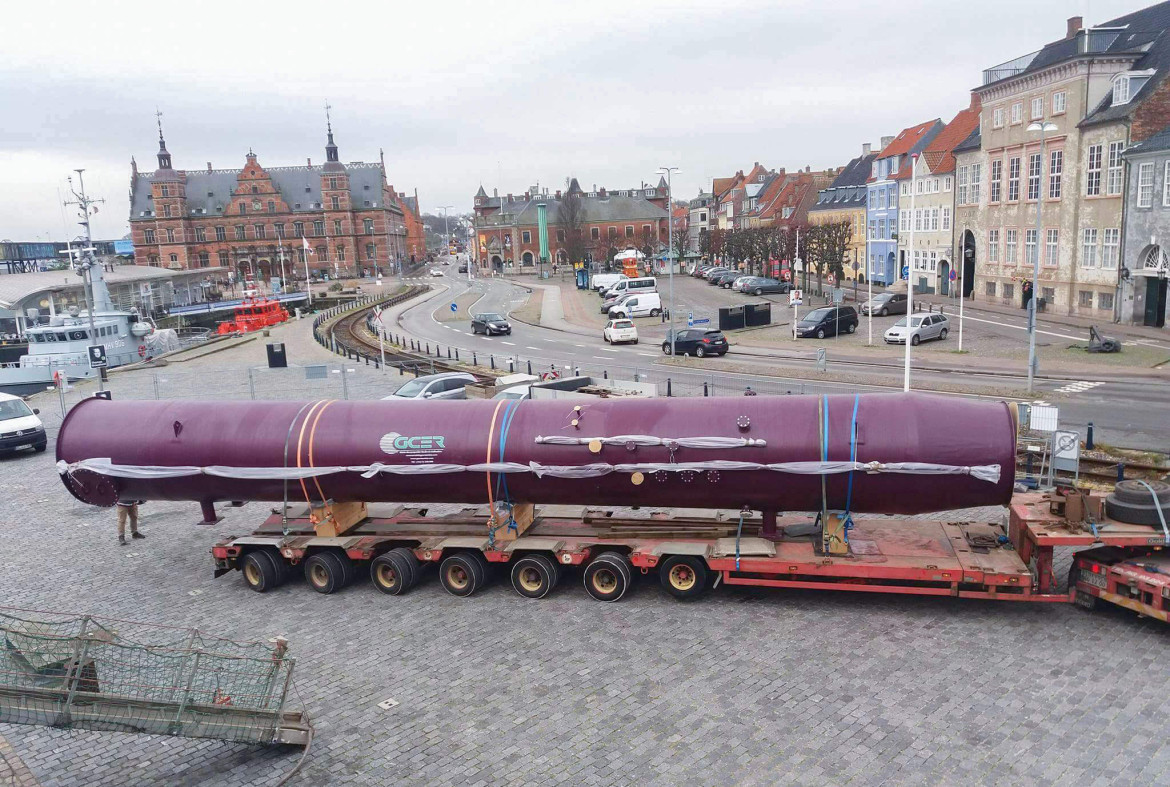
GRP (Glass Reinforced Polyester) tanks are manufactured by combining resins and glass fibers, which gives them high resistance to corrosion, chemicals, and heat. Thermoplastic tanks, on the other hand, are made from plastics such as PVC, HDPE, or PP, etc. These plastics are more flexible and easier to mold. Thermoplastic tanks are often lighter, but GRP tanks offer better mechanical strength and are more suitable for extreme conditions.
GRP tanks generally have a longer service life than thermoplastic tanks due to their increased resistance to corrosion, chemicals, and extreme conditions. A GRP tank can last between 30 and 50 years, while a thermoplastic tank can have a lifespan of 15 to 25 years, depending on the conditions of use and the type of liquid stored.
GRP tanks are suitable for storing a wide range of liquids, including aggressive chemicals, oils, acids, and bases. Thermoplastic tanks are better suited to less aggressive liquids, but certain materials such as HDPE or PVC can be used to store specific chemicals. It is important to ensure that the tank material is compatible with the liquid to be stored in order to prevent degradation of the tank.
GCER offers a wide range of GRP (Glass Reinforced Polyester) filters adapted to various industrial needs : • Sand filters • Cartridge filters • Basket strainers • Activated carbon filters • Bag filters • Membrane housings
A grating is an openwork structure composed of mesh (often square or rectangular), used primarily as anti-slip flooring in industrial areas, walkways, platforms, or wet areas. It allows liquids to drain, provides ventilation, and offers good mechanical strength.
The grating is designed to : • Create safe walking surfaces. • Allow water or chemicals to drain away. • Offer good load-bearing capacity and corrosion resistance. • Maintain a non-slip surface in slippery environments.
GRP grating offers many advantages : • Excellent corrosion resistance : suitable for chemical, marine, or humid environments • Lightweight : easier to handle and install than traditional metal materials • High mechanical strength : withstands heavy loads while maintaining its shape • Non-slip surface : improves safety in walkways, even in wet conditions • Low maintenance : does not rust and does not require regular treatment • Extended service life : excellent durability even in extreme conditions • Electrical insulation : non-conductive material, ideal for environments with electrical hazards • UV and weather resistance : suitable for outdoor use
GRP (Glass Reinforced Polyester) gratings are a high-performance alternative to steel due to their light weight, corrosion resistance, and durability in aggressive environments (chemical, marine, humid, etc.). Unlike steel, they do not rust, require no anti-corrosion treatment, and need very little maintenance. Their non-slip surface improves user safety, and their low electrical conductivity makes them suitable for sensitive environments. They therefore offer a reliable, economical, and sustainable technical solution.
Our GRP (Glass Reinforced Polyester) gratings are frequently used in conjunction with other industrial equipment, such as metal platforms, to create integrated and optimized solutions. This combination ensures the safety, stability, and durability of installations, even in particularly demanding industrial environments.
GRP (Glass Reinforced Polyester) gratings are available in several standard sizes depending on the model : • ISO30 (thickness 30 mm, mesh size 31 x 31 mm): 1000 x 4000 mm • ISO38 (thickness 38 mm, mesh size 31 x 31 mm): 1220 x 3660 mm • ISO38 (thickness 38 mm, mesh size 13 x 13 mm): 1000 x 4000 mm • ISO40 (thickness 40 mm, mesh size 76 x 76 mm): 1000 x 4000 mm Custom dimensions can be manufactured to meet the specific needs of each project, ensuring a perfect fit for your installations.